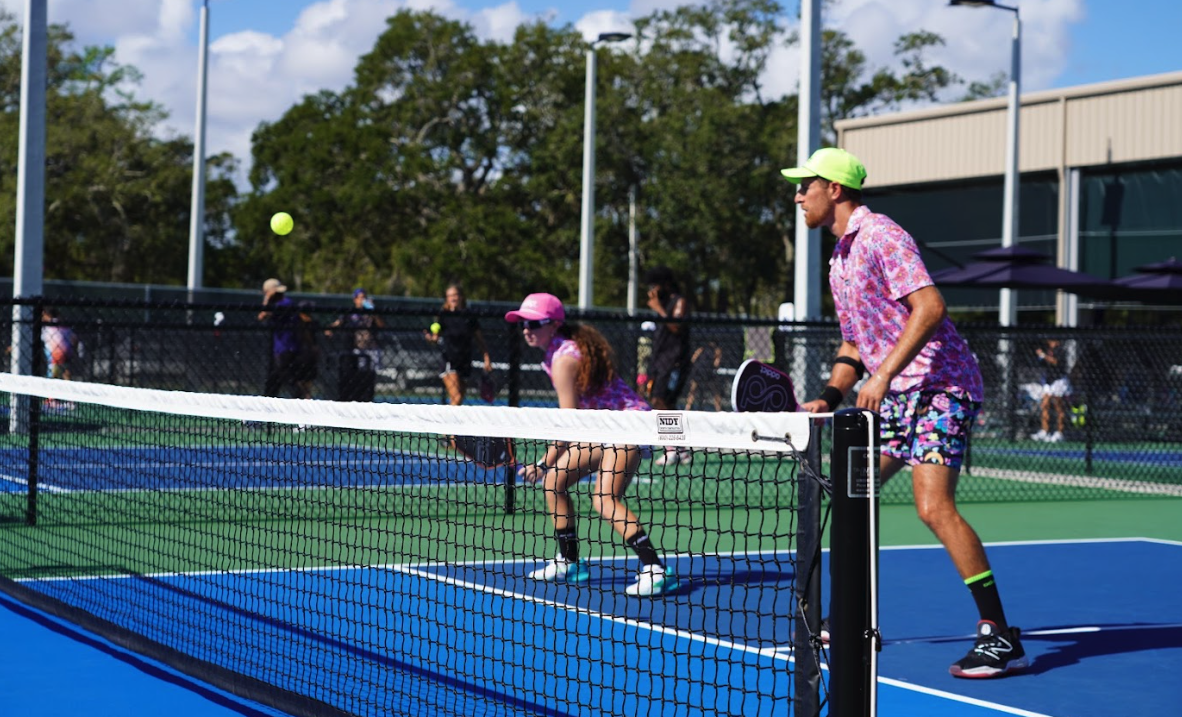
A dead dink in pickleball is essentially a gift shot from your opponent. This guide breaks down how to identify a dead dink and exactly how to attack it every single time.
Pickleball dead dinks are the gift shots that separate winners from casual players, and you d be surprised how many amateurs still let them bounce passively.
The frustrated rally, the floating ball that sits up, the moment you hesitate and hit another soft dink back, all of it comes back to not recognizing a dead dink when it happens.
Miss that read and you re leaving critical points on the table, arguing with yourself about why you didn t go for the attack.
Here s the good news: attacking a dead dink is straightforward once you see it as a signal, not just another shot.
If you want to win more pickleball games in 2026 , mastering this one read is one of the fastest ways to get there.
Love pickleball? Then you ll love our free newsletter . We send the latest news, tips, and highlights for free each week.
What Is a Dead Dink in Pickleball?
A dead dink in pickleball is a dink shot that sits higher than usual, has little to no spin, and gives you time and space to attack.
It s a passive shot by your opponent that screams hit me, essentially a gift shot you should attack every single time.
When you see a dead dink your opponent hits, the worst thing you can do is hit another passive dink back. Instead, you must instantly deploy one of three attacking options: aggressive dink, speed-up, or offensive lob.
Top teaching professionals, including internet sensation Kyle Koszuta, call this specific ball a dead dink for this exact reason.
If you are letting these balls bounce and casually returning them with a soft, passive shot, you are leaving critical points on the table.
The 6 essential pickleball shots to master for 2026 include this exact scenario, recognizing the dead ball and converting it.
Anatomy of a Dead Dink
To master the kitchen line, you must first understand the anatomy of a weak shot.
A dead dink is simply a dink that sits high, gives you time and space, or basically screams hit me.
It is an unforced, passive error that hands tactical control over to you if you know how to read it.
What Makes a Dink Dead ? Key Characteristics
The logic here is straightforward, yet it is frequently overlooked by recreational players.
In recreational pickleball, players often get caught in a hypnotic rhythm, hitting soft dinks back and forth indefinitely.
The 12 drills you need to play your best pickleball in 2026 were specifically designed to break players out of this passive habit pattern.
As Kyle Koszuta states:
Why Dead Dinks Are Dangerous (When You Hit Them)
Understanding the dead dink is a two-way street.
While you want to hunt them down when your opponent hits them, you must eliminate them from your own defensive arsenal.
They are widely considered the #1 dink you must avoid in competitive play for several distinct reasons:
Key Strategic Rule: The deeper your dead dink gets toward the opponent s kitchen line, the more dangerous it becomes for you.
The Modern Pickleball Mindset: Aggression Wins
The landscape of competitive pickleball has evolved dramatically.
The days of playing purely passive, stay-in-the-point pickleball, where you simply keep the ball in play and wait for your opponent to hit the net, are gone.
Modern pickleball is entirely about applying pressure, exerting your will on the court, and forcing opponents into uncomfortable positions.
When you get a dead dink in pickleball , attacking that ball is non-negotiable.
According to modern pickleball s four key strategies to winning in 2026 , transitioning from passive to aggressive ball-striking is the single most impactful shift a developing player can make.
The Dead Dink Breakthrough Blueprint
The goal of an attack isn t always to end the point immediately.
Sometimes it is simply about putting your opponent off balance and making them react rather than act.
If you don t capitalize on that floating opportunity right away, you might not get another look like it for the rest of the point.
2026 Pickleball Trends: Dead Dink Attack Evolution
The way pros attack dead dinks has evolved significantly in 2026. Here s what s changing:
What Is a Dead Dink in Pickleball Compared to a Push Dink? (2025-2026 Shift)
In 2025-2026, the terminology has shifted.
What was once called an aggressive dink is now more commonly called a push dink , a more offensive dink shot that puts sustained pressure on opponents.
Push dink characteristics:
Uses topspin to push opponents back
Applied with controlled pace crosscourt
Creates offense while staying in the soft game
Lift dink characteristics (defensive):
Used when out of position
Soft shot to reset the point
Defensive necessity, not offensive weapon
While topspin dinks are used to apply pressure and push opponents back, slice dinks are more about control and buying time.